Future of Artificial Intelligence: How AI Will Transform Life by 2030
-
 Daily Varthalu
- . June 23, 2026

Artificial Intelligence (AI) is no longer a futuristic concept. It is already changing the way we work, learn, communicate, and live. From AI-powered chatbots and self-driving cars to smart assistants and advanced healthcare systems, AI is becoming an integral part of our daily lives.
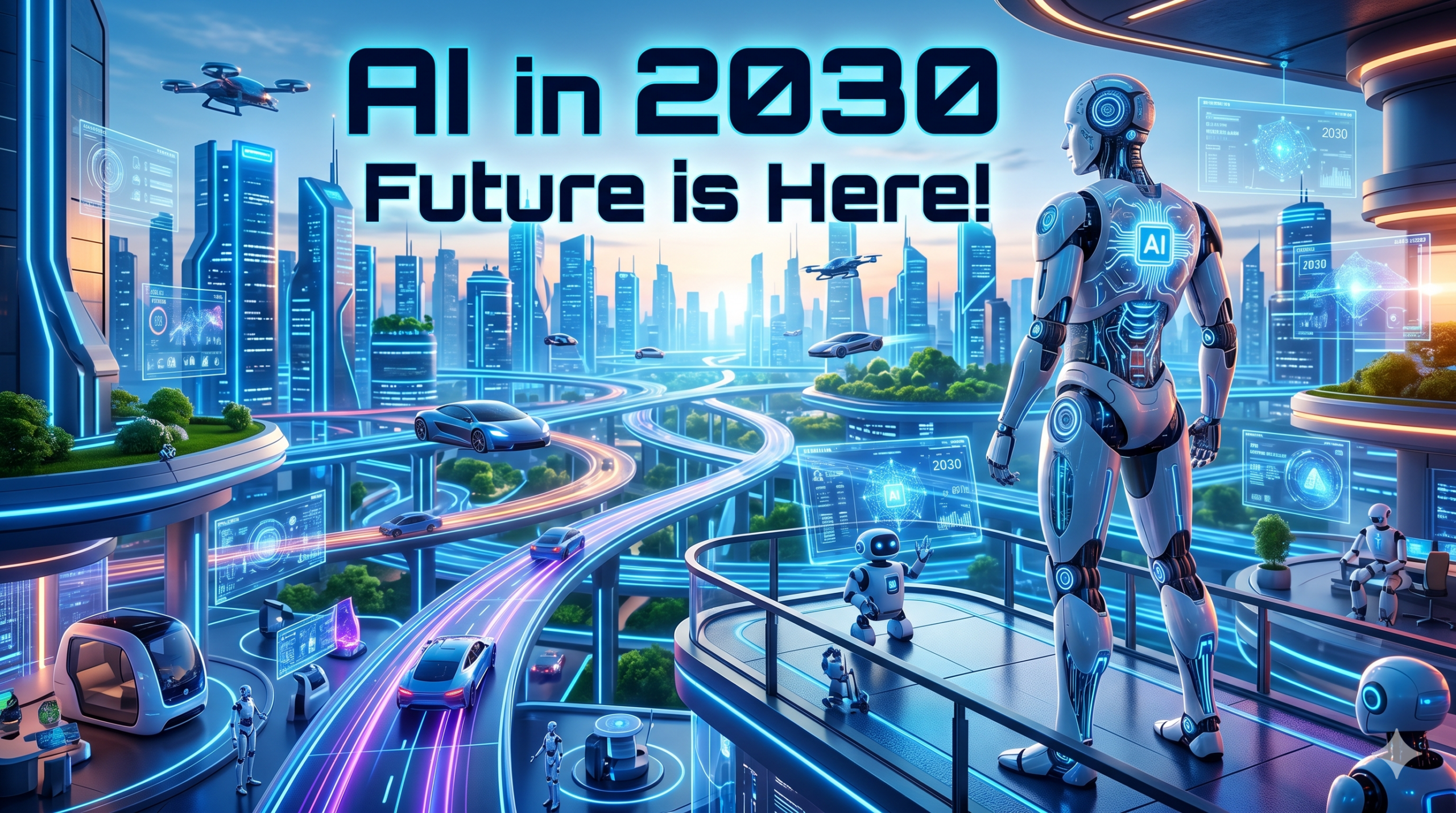
Experts predict that by 2030, AI will revolutionize nearly every industry, creating new opportunities while also presenting new challenges. In this article, we’ll explore how AI is expected to shape the future and impact our world over the next decade.
What is Artificial Intelligence?
Artificial Intelligence refers to computer systems that can perform tasks that typically require human intelligence. These tasks include learning, reasoning, problem-solving, decision-making, language understanding, and image recognition.
Popular examples of AI include:
- ChatGPT
- Google Gemini
- Siri
- Alexa
- Self-driving vehicles
- AI-powered recommendation systems
AI in Everyday Life
Many people already use AI without realizing it.
Examples include:
- Google Search results
- YouTube recommendations
- Netflix suggestions
- Voice assistants
- Smart home devices
- Navigation apps like Google Maps
As AI becomes more advanced, these technologies will become even smarter and more personalized.
AI in Healthcare
Healthcare is one of the industries expected to benefit the most from AI.
Benefits:
- Early disease detection
- Faster diagnosis
- Personalized treatment plans
- AI-assisted surgeries
- Drug discovery and research
AI can analyze medical data much faster than humans, helping doctors make more informed decisions.
AI in Education
The education sector is rapidly adopting AI-powered tools.
Future Applications:
- Personalized learning experiences
- AI tutors available 24/7
- Automated grading systems
- Interactive learning platforms
- Language translation for global education
Students will be able to learn at their own pace with customized lessons.
AI in Business
Businesses are using AI to improve efficiency and customer experiences.
Common Uses:
- Customer support chatbots
- Sales forecasting
- Marketing automation
- Fraud detection
- Business analytics
Companies that adopt AI effectively will gain a competitive advantage in the future.
AI and Jobs
One of the biggest concerns about AI is its impact on employment.
Jobs Most Likely to Be Automated:
- Data entry
- Repetitive administrative tasks
- Basic customer service
- Manufacturing processes
Jobs Expected to Grow:
- AI Engineers
- Data Scientists
- Cybersecurity Specialists
- Machine Learning Experts
- AI Product Managers
Rather than replacing all jobs, AI is expected to transform many roles and create new opportunities.
AI in Transportation
Transportation is undergoing a major transformation thanks to AI.
Future developments include:
- Self-driving cars
- Smart traffic management systems
- Autonomous delivery vehicles
- AI-powered logistics networks
These innovations may reduce accidents and improve transportation efficiency.
AI in Smart Homes
Smart homes are becoming more intelligent with AI integration.
Examples:
- Voice-controlled devices
- Smart security systems
- Automated lighting
- Energy-efficient appliances
Future homes may anticipate user needs and automatically adjust settings for comfort and efficiency.
Challenges of AI
Despite its benefits, AI also presents challenges.
Key Concerns:
- Data privacy
- Cybersecurity threats
- Bias in AI systems
- Job displacement
- Ethical decision-making
Governments and technology companies are working on regulations to ensure responsible AI development.
The Future of AI by 2030
Experts predict that AI will become:
- More intelligent
- More accessible
- More personalized
- More integrated into daily life
AI could help solve global challenges such as healthcare access, climate change, education inequality, and resource management.
Conclusion
Artificial Intelligence is shaping the future of humanity. While challenges remain, AI has the potential to improve productivity, healthcare, education, and quality of life. Understanding AI today will help individuals and businesses prepare for the opportunities of tomorrow.